
Canister Set RFQs: List Every Body and Lid
Request a canister set quotation with an explicit member schedule. Identify every body and its matching lid, the selected finish and the number of complete sets required. Ask the supplier to acknowledge the schedule and any proposed alternative. A three-container catalogue arrangement alone does not settle commercial contents, dimensions or mixed-colour options.
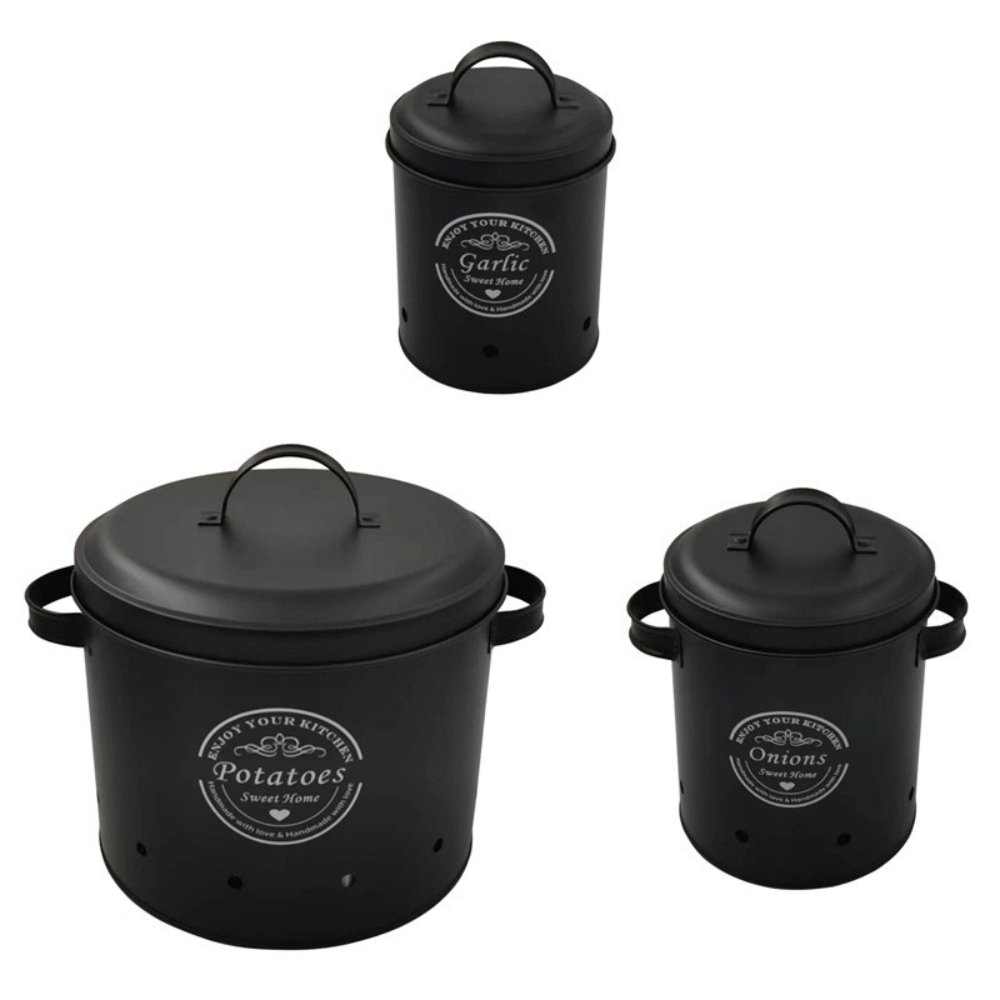
Yafeng presents an Onion and Potato Storage Container Set of 3 with three differently sized, labelled bodies. The selected catalogue arrangements also vary in colour and decorative artwork. A buyer needs a precise set definition before comparing offers, rather than assuming that every pictured arrangement represents the same supplied combination.
Give each member a distinct identity
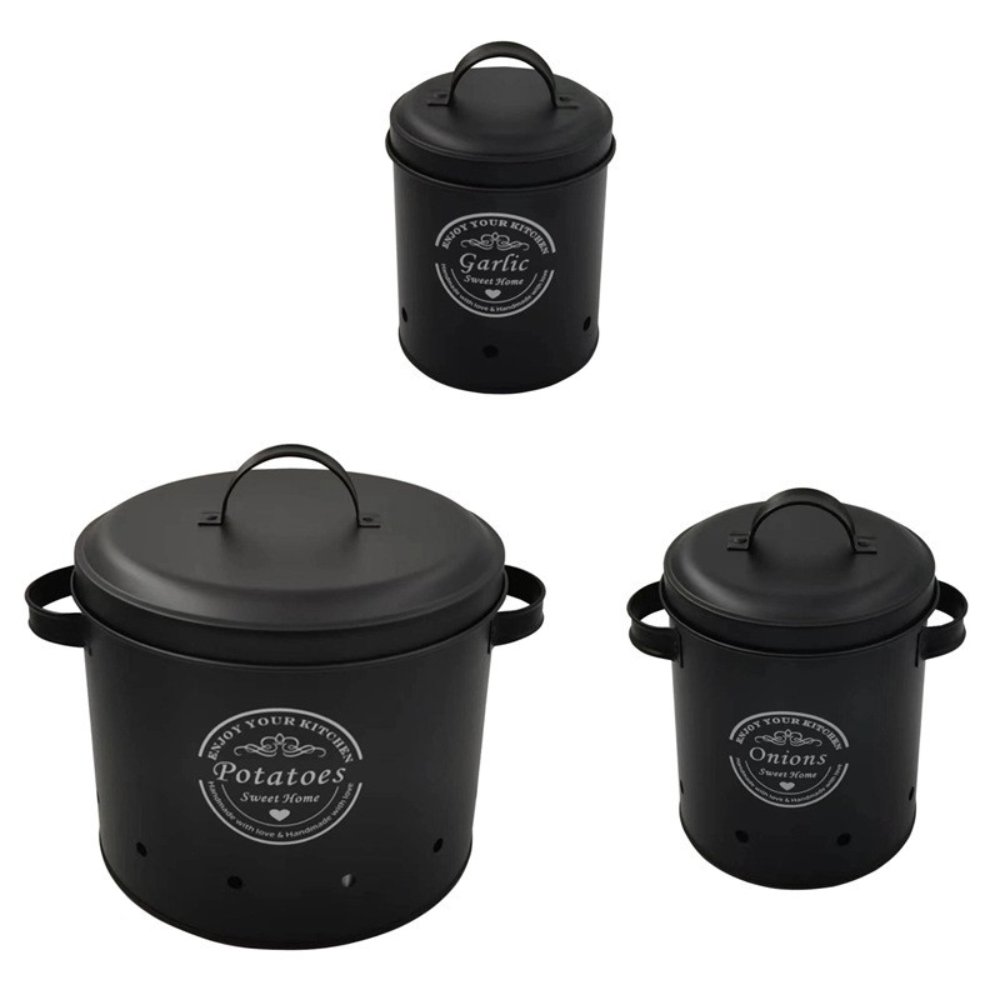
Start from the three-container product reference. The visible labels identify Garlic, Onions and Potatoes on differently sized bodies. Assign each member a buyer identifier and ask the supplier to state the corresponding product reference in its quotation.
Keep labels, relative catalogue appearance and confirmed dimensions separate. A large-looking body in a photograph is not a measured capacity statement. Request any required dimension using named reference points and do not treat a food word on the front as proof of a preservation result.
- One buyer identifier for every body.
- Matching lid identified per member.
- Selected finish and artwork combination.
- Complete-set quantity distinguished from loose replacements.
Record the lid with its intended body
The selected views show closed bodies with handled lids. Ask the supplier to identify which lid belongs to each scheduled member. Do not use one general lid description for several sizes unless the supplier expressly confirms the proposed relationship.
If a sample set is requested, give the member and lid identifiers to the reviewer. Record an absent, substituted or unmatched component against its own line. A complete-looking group photograph cannot answer a question about the actual loose components supplied for that selected offer.
| Schedule line | Supplier acknowledgement | Unconfirmed assumption |
|---|---|---|
| Body member | Model, chosen face and required dimensions | Capacity inferred from a photograph |
| Matching lid | Identity linked to that body | One lid fits every size |
| Complete set | Named members and selected appearance | Any mixed-colour combination |
| Packing | Proposed contents and set count | A universal carton quantity |
Select one finish and artwork combination
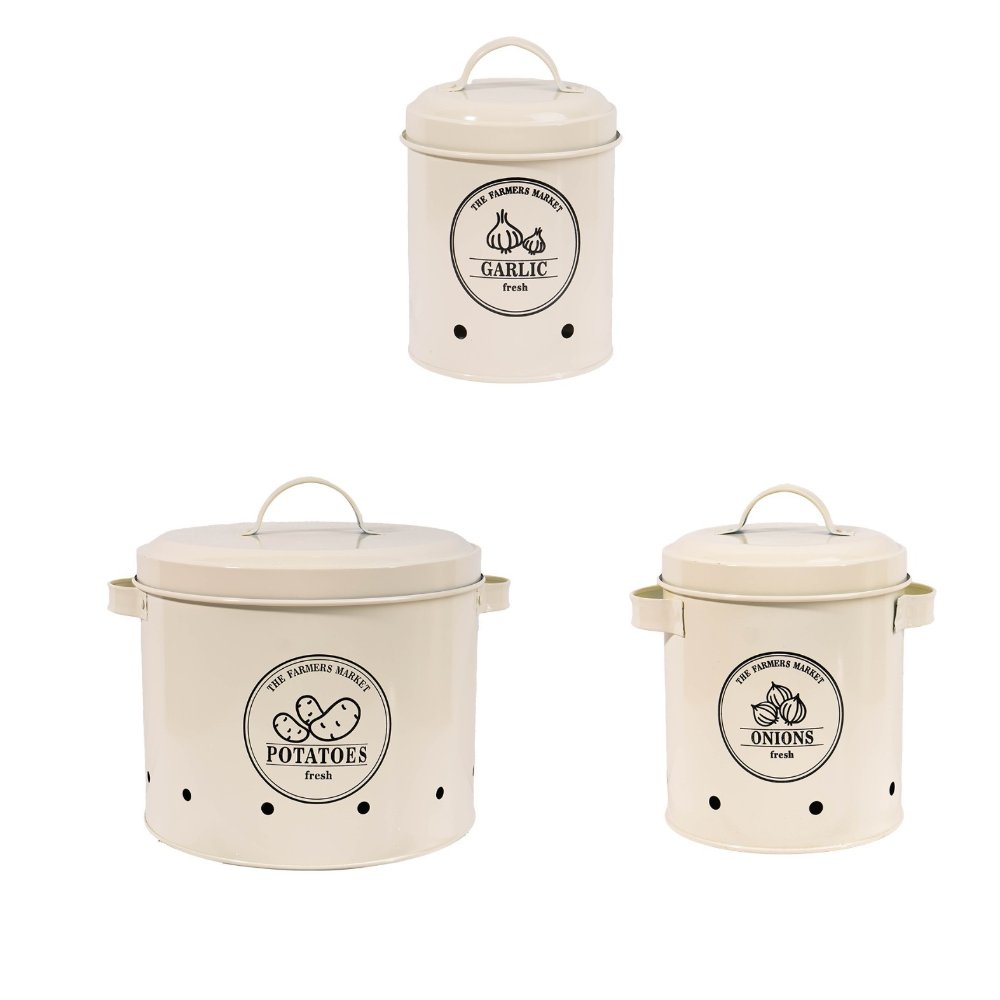
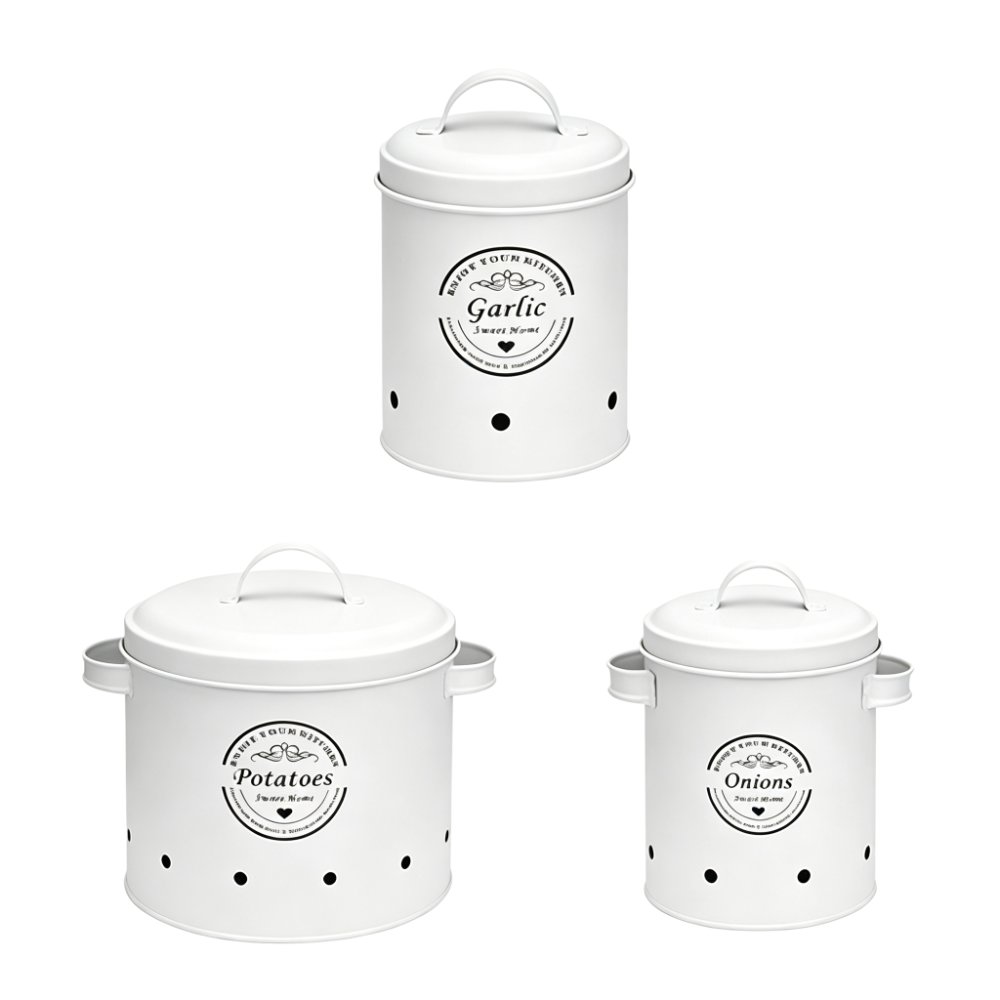
The black and white catalogue arrangements use different visual wording details from the cream-coloured reference. Specify which complete appearance is being requested rather than treating the pictures as interchangeable colour swatches. Name the selected set reference and any member-specific exception.
Do not infer that a mixed-colour set is offered because several colours appear online. Ask whether the intended combination is available and how the supplier would identify it. Any proposed alternative should remain distinct from the original request so its contents can be compared clearly.
Define the commercial unit before adding quantities
State whether the enquiry is for complete sets or individual replacement members. For a complete set, link the quantity to the accepted membership schedule. If a single body or lid is requested separately, ask for a separate offer rather than assuming spare components are stocked.
Keep the set count separate from any outer packing quantity. Ask what the supplier proposes for the selected configuration and what is included in that packing. The schedule below names fields to confirm; it does not supply an invented carton count, replacement policy or available assortment.
Reconcile the offer with the requested schedule
Check the supplier response for each member, matching lid and selected appearance. Retain requested and offered values side by side. A price comparison is incomplete when one offer refers to a full set and another leaves a member or lid outside its stated contents.
Carry the accepted schedule into the order and receiving reference. Keep any packaging or physical sample review linked to the same set identity. Product names and visible lower holes do not establish moisture control, ventilation effectiveness, food-contact suitability or storage life; such requirements need their own appropriate product-specific information.
Frequently Asked Questions
Is a set count the same as a body count?
No. Define the members of one complete set first, then state how many such sets are requested.
Can one catalogue image approve every finish?
No. Identify the selected finish and artwork arrangement, and ask the supplier to state any proposed alternative explicitly.
Are replacement lids automatically available?
Ask for a specific offer. The presence of a lid in a catalogue arrangement does not establish a spare-parts supply policy.
Do vegetable labels prove preservation performance?
No. They identify visible decoration. Any food-contact or storage-performance requirement needs separate appropriate information for the actual product.
Use the set reference and send your member schedule through Contact. Visit the blog for related sourcing discussions.